Geopolitical Fractures Report 2026

The old world is dying and the new world struggles to be born. This is the interregnum.

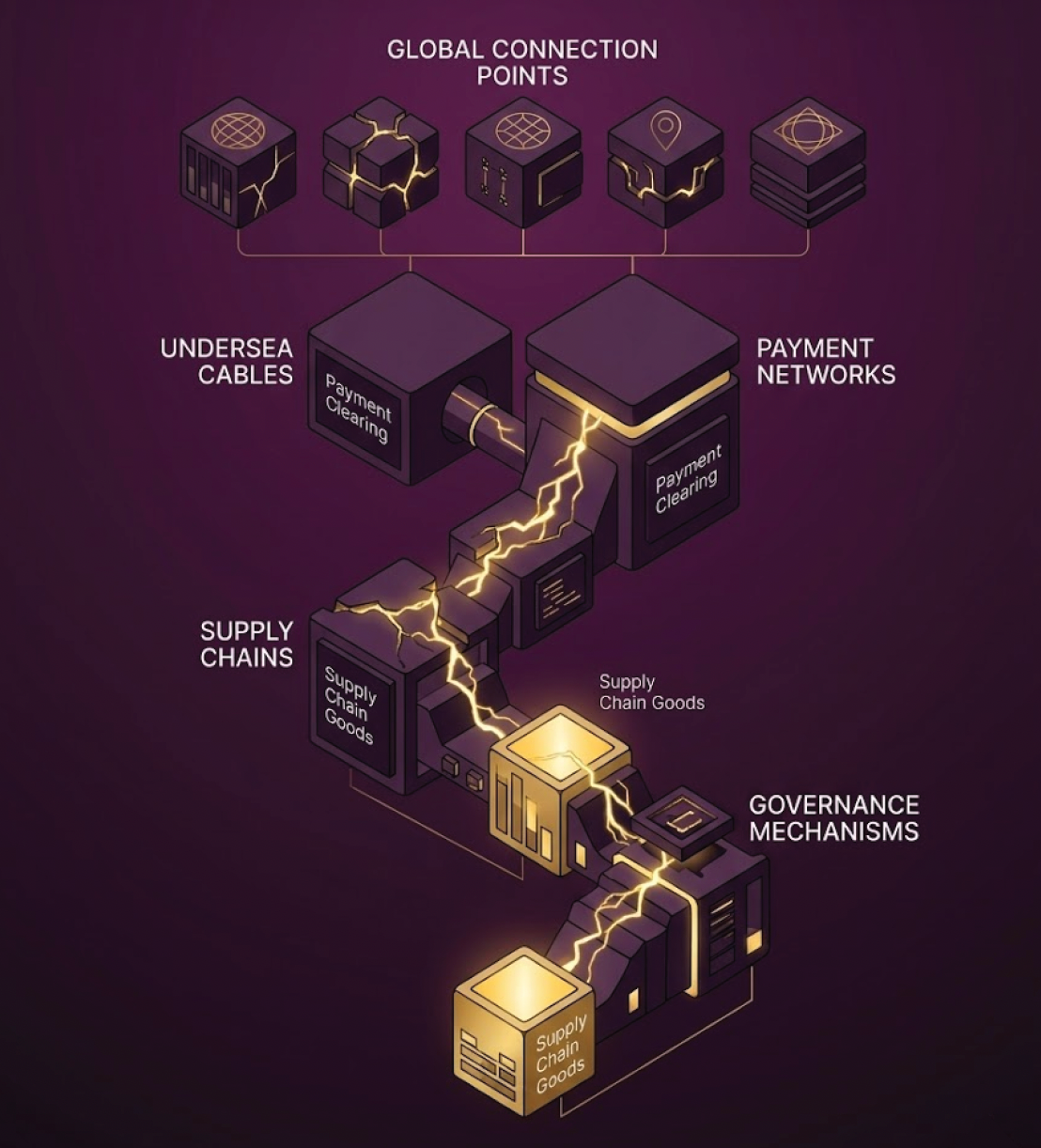
The financial architecture that clears payments, the insurance markets that absorb loss, the supply chains that carry goods, the governance mechanisms that coordinate crisis response. These are not background to geopolitics. They are geopolitics. And they are hollowing out from within.

Geopolitical Fractures 2026 maps four structural breaks where these systems are already failing, and tracks how they compound. The cascades this report tracks are not hypothetical. They are unfolding in real time.

Report launches March 31, 2026. Register for early access below.
Report Highlights

Discover the new dynamics shaping global power structures


Geopolitical power increasingly operates through the systems that underpin the global economy: payment clearing, insurance markets, supply chains, data cables, and resource processing. These infrastructures are no longer background conditions but mechanisms through which power is exercised, contested, and withdrawn.

Systems: New Power Arenas


The report identifies four emerging fractures: evolving dependence on the dollar alongside quiet diversification, widening gaps between insurance coverage and real protection, concentrated infrastructure chokepoints, and overlapping rule systems imposed by competing geopolitical blocs.

Global Systems Fracturing


The post-1990 international system persists in form but is weakening in function. States continue operating within shared institutions while simultaneously building parallel systems, managing infrastructure decay, and confronting structural gaps where no replacement mechanisms exist.

Global Order Interregnum


Risk is no longer determined primarily by position in a power hierarchy. It depends on whether actors have alternatives. States and institutions building exits, controlling chokepoints, or holding capital retain leverage, while those locked into shared systems face greater exposure when disruption occurs.

Risk Exposure Shifting

Mapping four emerging “fractures,” the report identifies divergences between how global systems appear to function and how they actually operate